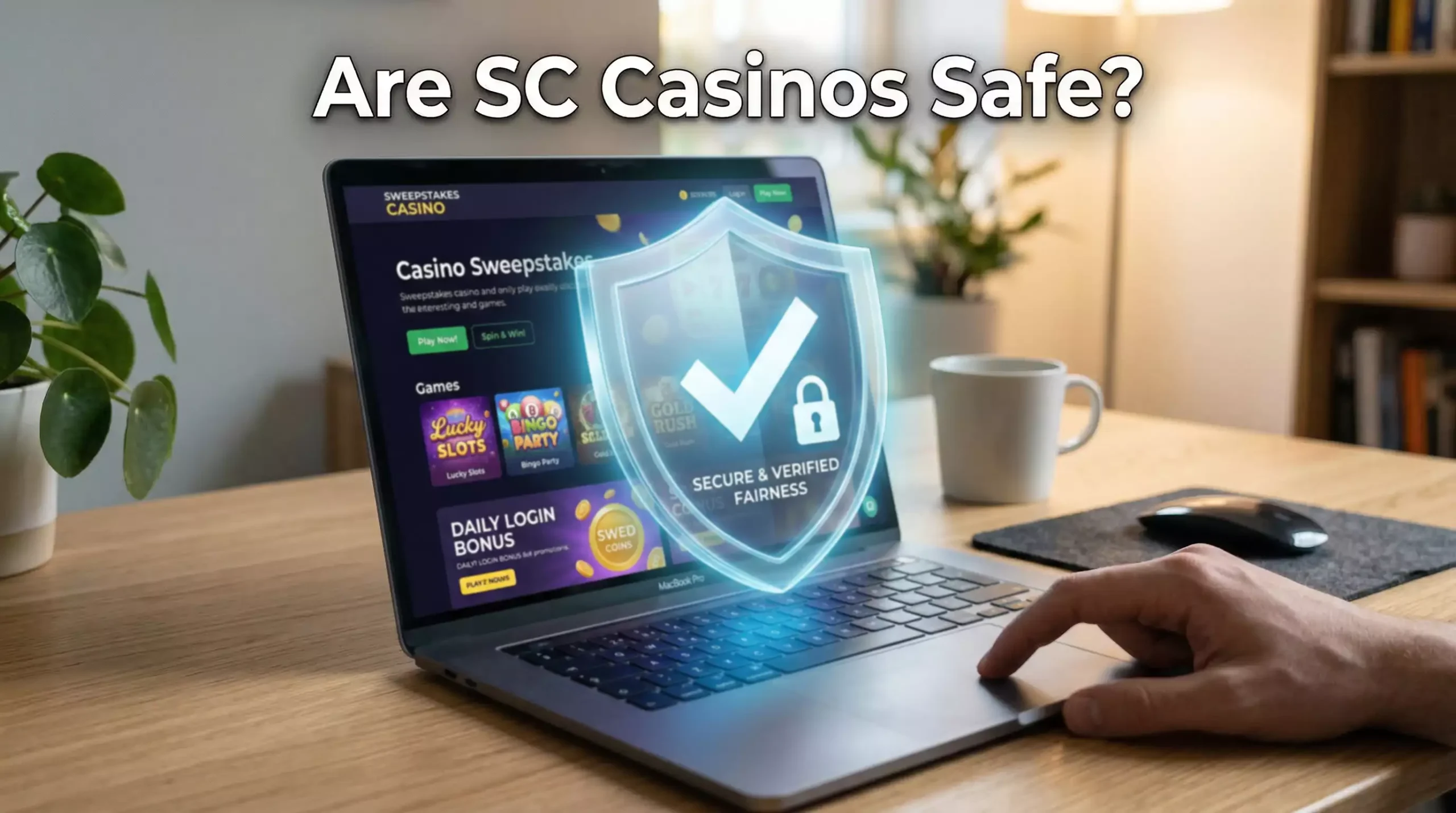
The safety question at sweepstakes casinos splits into two distinct concerns: are the games fair, and is your personal data secure? The answer to both is “it depends on the platform” — which isn’t reassuring, but it’s accurate. Sweepstakes casinos aren’t subject to the licensing and auditing requirements that govern regulated online casinos, which means the safeguards that do exist are voluntary. Some operators invest heavily in third-party certifications, RNG testing, and enterprise-grade encryption. Others operate with minimal transparency and no independent verification.
This article examines the three pillars of sweepstakes casino safety — RNG certification, fairness audits, and data security — and provides a practical framework for assessing whether a specific platform meets reasonable safety standards. The information here won’t make every platform trustworthy, but it will help you identify the ones that are making a demonstrable effort.
RNG Certification: Who Tests Sweepstakes Games
Random Number Generators are the algorithms that determine game outcomes — every slot spin, every card dealt, every crash point. If the RNG is compromised, manipulated, or poorly implemented, the games aren’t fair regardless of what the platform claims. In the regulated iGaming market, RNG testing by independent labs is mandatory. In the sweepstakes space, it’s optional.
The stakes of this gap are real. According to AGA research, 68% of sweepstakes casino players say their primary goal is winning real money. When players are wagering SC with genuine cash redemption value, the integrity of the RNG isn’t an abstract technical concern — it’s the foundation of whether the transaction is honest.
Some sweepstakes casinos use games from providers whose RNG systems are certified for the regulated market. When Pragmatic Play, NetEnt, or Hacksaw Gaming supplies a slot to a sweepstakes platform, that game’s RNG has already been tested and certified by labs like GLI (Gaming Laboratories International), BMM Testlabs, or NMi for deployment in jurisdictions like New Jersey, Malta, or the UK. The game code is the same whether it runs at a licensed casino or a sweepstakes site — the RNG certification travels with the game.
The gap appears with proprietary games developed by the platform itself or by unknown studios without verifiable certification. If a sweepstakes casino runs in-house slot titles with no attributed provider and no published certification, there’s no external validation that the RNG produces genuinely random outcomes. The platform might be perfectly fair, but you have no way to verify that claim independently.
For practical safety assessment: check whether the platform’s games come from recognized, certified providers. If the game library prominently features Pragmatic Play, NetEnt, or similar names, the RNG behind those specific titles is certified even if the platform itself isn’t audited. If the library consists entirely of unbranded games with no provider attribution, the RNG question is unanswered.
Third-Party Fairness Audits: eCOGRA, iTech Labs, and Others
Beyond game-level RNG certification, some sweepstakes casinos undergo platform-level fairness audits conducted by independent testing agencies. These audits evaluate the overall payout rates, game configuration integrity, and operational fairness of the platform as a whole — not just individual games.
eCOGRA (eCommerce Online Gaming Regulation and Assurance) is the most recognized name in online casino fairness testing. An eCOGRA seal on a sweepstakes casino’s site indicates that the platform has submitted to independent testing of its payout percentages and game operations. The audit verifies that the games return prizes at rates consistent with their published (or configured) RTPs and that the platform isn’t secretly running games at lower-than-advertised return rates.
iTech Labs is another major testing laboratory that certifies RNG systems and conducts compliance testing for online gaming platforms. iTech Labs certification means the platform’s games have been evaluated against international standards for randomness and fair play.
GLI and BMM Testlabs primarily serve the regulated market but occasionally certify systems used by sweepstakes operators, particularly those seeking to build credibility for potential future licensing.
The reality is that most sweepstakes casinos don’t carry third-party fairness seals. The auditing process is expensive and time-consuming, and since no regulation requires it, many operators skip it entirely. Among the major platforms, the presence or absence of a fairness seal varies — some display it prominently in their footer, others reference it in their terms, and many have no auditing relationship at all.
When a platform does carry a recognized fairness seal, it’s a meaningful trust signal. The seal means an independent party — with no financial incentive to approve a rigged system — has verified that the games operate as claimed. It doesn’t guarantee that the platform is perfect in every respect, but it addresses the specific question of whether the games are mathematically fair. When a platform doesn’t carry a seal, that absence isn’t proof of wrongdoing, but it means the fairness claim rests entirely on the operator’s word.
Data Security: Encryption, Privacy, and Compliance
Fairness is half the safety equation. The other half is whether your personal and financial data is protected against unauthorized access, misuse, or breach.
At a minimum, any sweepstakes casino handling real money transactions should use SSL/TLS encryption for all data in transit. This means the connection between your browser (or app) and the platform’s servers is encrypted, preventing interception of your login credentials, payment information, and personal data. You can verify SSL encryption by checking for the padlock icon in your browser’s address bar and confirming the URL begins with “https.” If a platform doesn’t use SSL in 2026, don’t create an account.
KYC data security deserves particular attention. Sweepstakes casinos collect sensitive documents during identity verification — government-issued IDs, proof of address, and sometimes partial SSN information. This data, if mishandled, exposes players to identity theft. Reputable operators store KYC documents on encrypted servers with access controls that limit who within the organization can view them. Less reputable operators may not have comparable safeguards in place.
Privacy policies are legally required disclosures that explain what data the platform collects, how it’s used, and whether it’s shared with third parties. Read the privacy policy before uploading sensitive documents. Look specifically for: whether the platform shares data with advertisers, how long KYC documents are retained after verification, and what happens to your data if you close your account. Vague or missing privacy policies are a red flag.
The enforcement environment provides an indirect safety signal. According to iGaming Business, regulators sent over 100 cease-and-desist letters to sweepstakes operators in 2025. Platforms that have been subject to enforcement actions, fines, or lawsuits aren’t necessarily unsafe from a data perspective, but they are operating under heightened legal scrutiny — which can mean either that regulators consider them problematic or that regulators are broadly targeting the entire category. Use enforcement history as one data point, not a verdict.
Payment security rounds out the picture. Platforms that process transactions through established payment processors (Stripe, PayPal, established crypto processors) benefit from those processors’ own security infrastructure and fraud detection systems. Platforms that route payments through unknown intermediaries offer less assurance that your financial data is handled to industry standards.
Key Takeaway: Sweepstakes casino safety is not guaranteed by any licensing body — it depends on the platform’s voluntary investments in game fairness and data protection. Check for games from certified providers (Pragmatic Play, NetEnt, Hacksaw) as evidence of RNG integrity. Look for third-party fairness seals from eCOGRA or iTech Labs as platform-level assurance. Verify SSL encryption and review the privacy policy before uploading KYC documents. The absence of certifications isn’t proof of a scam, but their presence is a verifiable trust signal. In an unregulated market, the burden of due diligence falls entirely on the player.
Are Sweepstakes Casinos Safe? RNG, Audits & Data Security — More on this topic at sc casino games.
See also Sweepstakes Casino Scratch Cards & Instant Win Games (2026).