
Sweepstakes casinos present themselves as entertainment platforms, but for a significant portion of their player base, the experience is functionally identical to gambling. Real money goes in through Gold Coin purchases. Real money comes out through Sweeps Coin redemptions. The games produce the same dopamine cycles as regulated casino slots. And the absence of licensing requirements means that many platforms operate with fewer consumer protections than their regulated counterparts.
This isn’t an argument against sweepstakes casinos — it’s a statement of fact that should inform how players approach them. Responsible gambling tools exist at many SC platforms, and knowing how to use them is a practical skill, not a moral judgment. This guide covers the tools available, how to set them up, and where to find professional help if gambling stops being entertainment and starts causing harm.
Responsible Gambling Tools Available at SC Casinos
The responsible gambling landscape at sweepstakes casinos is uneven. Some platforms offer a full suite of tools comparable to what’s available at licensed iGaming sites. Others provide minimal or no self-regulation features, leaving players entirely responsible for managing their own behavior.
The data on player behavior makes the availability of these tools particularly important. According to AGA research, 68% of sweepstakes casino players say their primary goal is winning real money, and 80% spend money on sweepstakes platforms monthly — nearly half do so weekly. These aren’t casual entertainment users. They’re actively engaged players who, in many cases, are treating sweepstakes casinos as a gambling activity even if the platforms don’t classify themselves that way.
Keith Whyte, then-Executive Director of the National Council on Problem Gambling, has pointed to the legal loophole that allows sweepstakes casinos to operate without the responsible gambling requirements imposed on licensed operators. That gap means the tools described below exist only at platforms that choose to offer them voluntarily — and some choose not to.
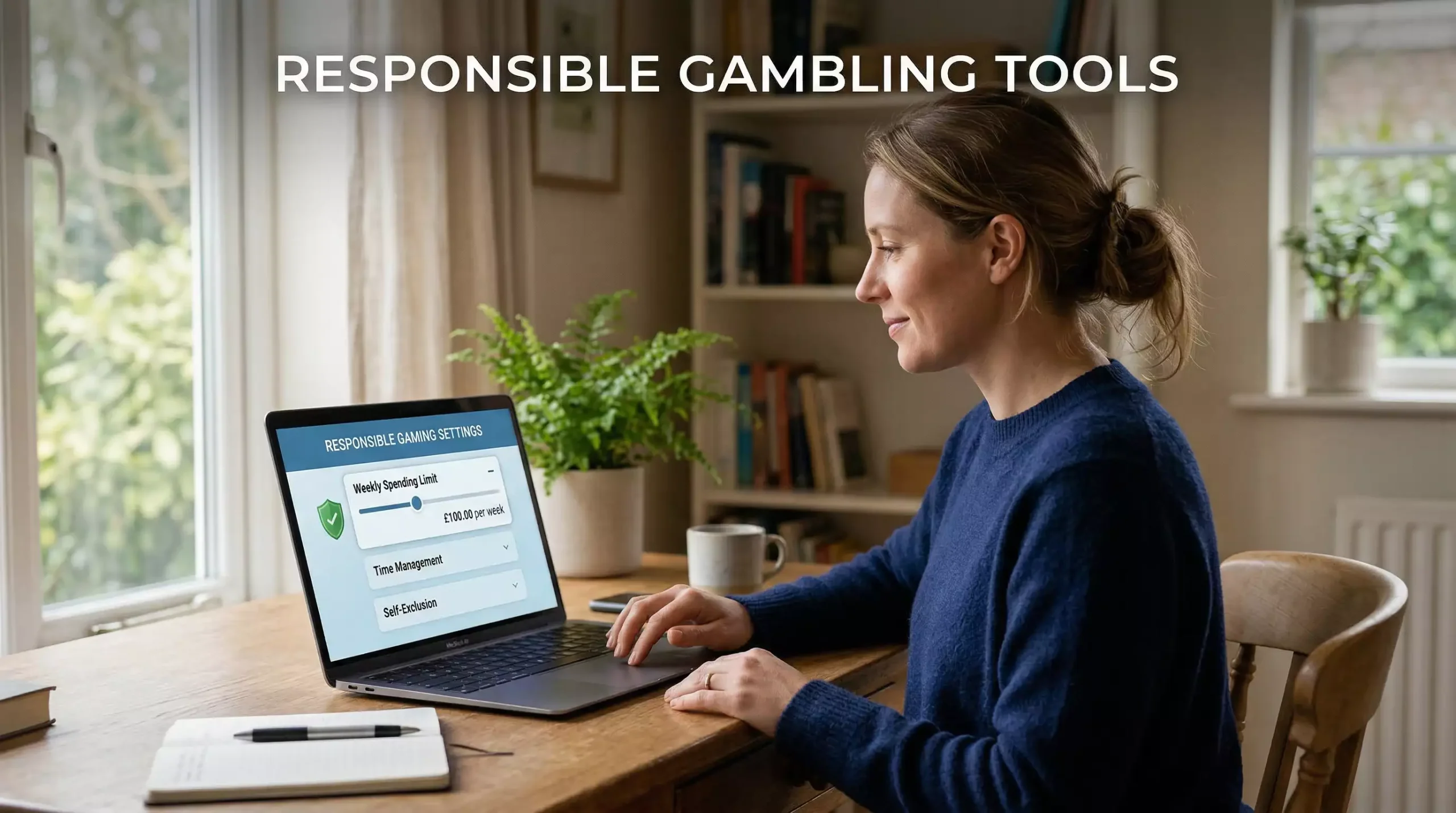
The tools that do appear across better-managed platforms include deposit limits (caps on how much you can spend on Gold Coin purchases per day, week, or month), session time reminders (alerts that notify you after a set period of active play), loss limits (automatic stops when your net SC losses reach a defined threshold), cooling-off periods (temporary self-imposed breaks from the platform), and self-exclusion (permanent or semi-permanent account closure). Not every platform offers all of these. Some offer none.
Self-Exclusion: How to Temporarily or Permanently Block Access
Self-exclusion is the most consequential responsible gambling tool. It removes your access to the platform entirely — temporarily or permanently, depending on the option you select. Once activated, you cannot log in, play games, make purchases, or access your account until the exclusion period ends (or ever, if you chose permanent exclusion).
At platforms that offer it, self-exclusion is typically found in the account settings under a “Responsible Gaming” or “Play Responsibly” section. The process usually requires confirming your decision through a multi-step verification — a deliberate friction designed to prevent impulsive activation that you’d immediately regret. Common duration options include 24 hours, 7 days, 30 days, 6 months, and permanent.
Important caveats apply. Self-exclusion at one platform doesn’t affect your accounts at other platforms. If you have accounts at Chumba, WOW Vegas, and Pulsz, excluding yourself at Chumba leaves the other two fully accessible. There is no cross-platform self-exclusion registry for sweepstakes casinos equivalent to the state-operated exclusion lists used in regulated gambling markets. Each exclusion must be enacted individually at each platform.
During an exclusion period, any remaining SC balance in your account is typically preserved. You can’t play or redeem during the exclusion, but the balance should still be there when — or if — the exclusion ends. If you’re considering permanent exclusion and have a redeemable balance, contact support to process a final withdrawal before activating the exclusion. Some platforms allow this; others require the exclusion to end before processing payouts.
Cooling-off periods function as lighter versions of self-exclusion. A cooling-off might restrict purchases and gameplay for 24–72 hours while keeping your account accessible for viewing balances and transaction history. It’s a middle ground for players who want to pause rather than fully lock out.
Setting Spending and Session Limits
Spending limits are the most practical day-to-day tool for players who want to stay in control without leaving the platform. Where available, they allow you to set a maximum dollar amount for Gold Coin purchases over a defined period — daily, weekly, or monthly.
The implementation varies by platform. At some operators, once you hit your limit, the purchase page simply stops allowing transactions until the next period resets. At others, you receive a warning when you approach the limit but can override it manually. The latter design is weaker from a protection standpoint — if you can override the limit in the moment you’re trying to spend, the limit’s behavioral impact is reduced.
Session time limits work differently. You set a duration — say, 60 minutes — and the platform displays a notification when that time elapses. Some platforms pause gameplay and require you to acknowledge the notification before continuing. Others display a passive pop-up that’s easily dismissed. The former is more effective. The latter is a checkbox exercise that provides the appearance of responsible gaming without meaningful friction.
The context behind these tools carries weight. According to NCPG survey data, approximately 9 million Americans experience problem gambling, with annual social costs estimated at $14 billion. Online gambling participation has grown from 15% of the gambling population in 2018 to 22% in 2024, and sweepstakes casinos represent a significant and growing share of that online activity. The tools described here don’t prevent problem gambling, but they give individuals a mechanism to impose boundaries that the platforms themselves aren’t required to enforce.
If a sweepstakes casino you use doesn’t offer spending or session limits, you can create your own. Set a monthly budget for Gold Coin purchases and track it in a spreadsheet or budgeting app. Use your phone’s screen time settings to limit the time you spend in the platform’s app. These self-imposed controls require more discipline than platform-enforced limits, but they’re available regardless of which platform you use.
Professional Support Resources and Helplines
If gambling — on sweepstakes platforms or any other format — is causing financial stress, relationship problems, or emotional distress, professional support is available and confidential.
The National Council on Problem Gambling (NCPG) operates the national helpline at 1-800-MY-RESET (previously 1-800-522-4700, which also remains active), available 24/7. The helpline provides confidential support, referrals to local counselors, and information about treatment options. Text and chat support are also available through the NCPG website at ncpgambling.org.
The SAMHSA National Helpline (1-800-662-4357) provides free, confidential treatment referrals and information for individuals facing substance use and mental health issues, including gambling disorders. It operates 24/7, 365 days a year.
Gamblers Anonymous (gamblersanonymous.org) offers peer support through a network of local and online meetings. The program follows a 12-step model and provides community-based support for individuals working to stop gambling.
Many states also operate their own problem gambling helplines and treatment programs, often funded through gaming tax revenue. Search “[your state] problem gambling helpline” for state-specific resources.
Key Takeaway: Responsible gambling tools at sweepstakes casinos exist at some platforms but are voluntarily offered, not legally required. The most important tools are spending limits (caps on Gold Coin purchases), session time reminders, and self-exclusion (temporary or permanent account lockout). Use them proactively — set limits before you need them, not after a bad session. Self-exclusion must be enacted individually at each platform; there’s no cross-platform registry. If gambling is causing harm, the NCPG helpline (1-800-MY-RESET) provides free, confidential support 24/7.
Responsible Gambling at Sweepstakes Casinos — More on this topic at sc casino games.
See also Sweepstakes Casino Tax Guide.